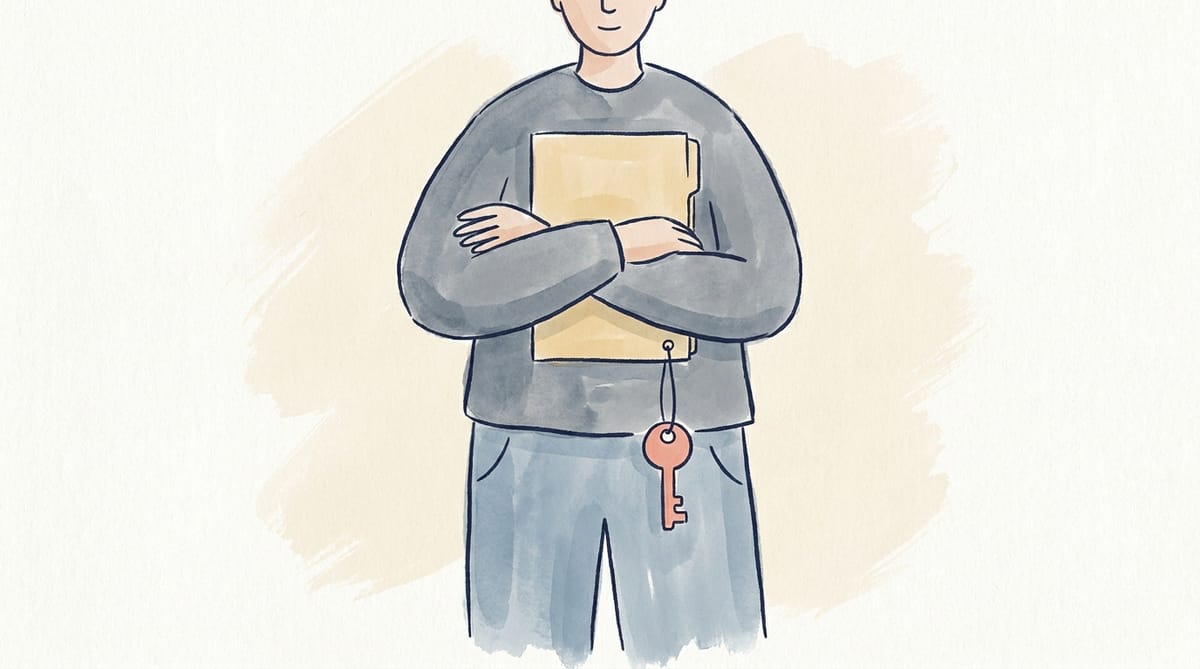
Who owns your medical record?
In most cases, you do not. Today, "patients' information is owned by systems."
Patients request records, wait for them, and carry them from office to office. The person with the most at stake has the least control.
In limb salvage, that patient may see a vascular surgeon, a podiatrist, a home health team and a primary care physician. Each office holds its own piece of the record.
The Patient Owns the Record
ImagenyX reverses that arrangement. The patient owns their information "and owns who has access to it."
The record lives with the patient. They can bring in MyChart exports and PDFs, build a single chronological library of their care, and share it through a link or QR code. Patients can control who has access through the platform and withdraw that access.
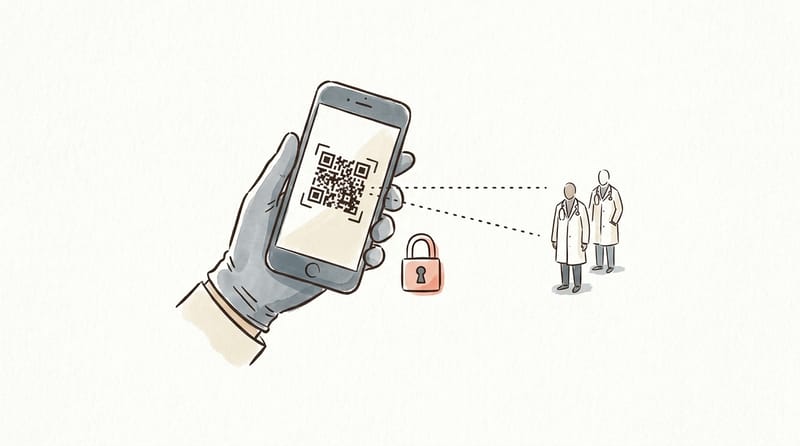
Sharing is the patient's decision. They decide which providers join their circle, and they can withdraw that access through the platform.
Why Control Matters
That control is not a secondary feature; it is central to the product. Patients trust what they control, trust drives use, and sustained use builds a longitudinal record that no single health system can assemble on its own, because no single system sees the whole patient.
This is also what we hope will make the platform durable. Our goal is to build a record patients trust and choose to keep using.
Over time, it allows the broader system to learn what works across treatments, care teams and institutions, without anyone surrendering ownership.
We are proving this first in limb salvage, where the stakes are highest and coordination is most difficult.
The numbers show how high those stakes are. Almost half of patients with peripheral artery disease die within a year of a major amputation. Each amputation costs more than $70,000. When the record follows the patient, every provider they invite works from the same history.