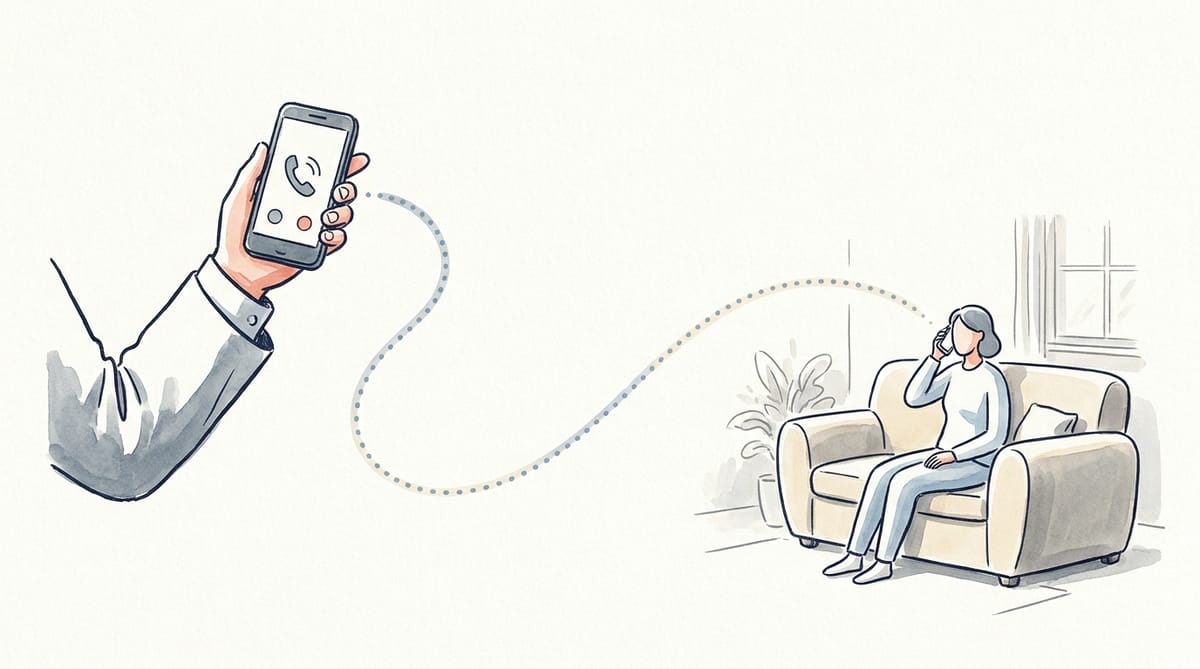
I give my patients my personal number.
That direct line makes a real difference. Yet the patient who stays with me is not someone who called. It is "the patient that I hadn't given my phone number to."
That is the underlying problem. A direct line that runs through one surgeon does not scale, and the rest of the care team cannot see it.
I have seen a patient lose a limb after weeks in the hospital "just because they couldn't communicate effectively. And information couldn't reach the appropriate person."
The Risk After Discharge
The risk does not end when the patient leaves the hospital. After life-saving vascular surgery, patients are discharged to fragmented care settings, where wounds deteriorate silently. A successful operation is undone, and the patient loses a limb that could have been saved.
In the US, more than 150,000 amputations happen every year. Most of them happen in people with diabetes. At ImagenyX, our line is simple: keeping a limb means keeping a life.
How ImagenyX Closes the Gap
ImagenyX was built to close that gap. It is a patient-centric communication platform that "lives above the EMR" and is designed to work independently of the EMR. The direct line remains, but it is now organized, owned by the patient, and shared with the vascular surgeon, podiatrist, home health team and primary care physician the patient chooses.
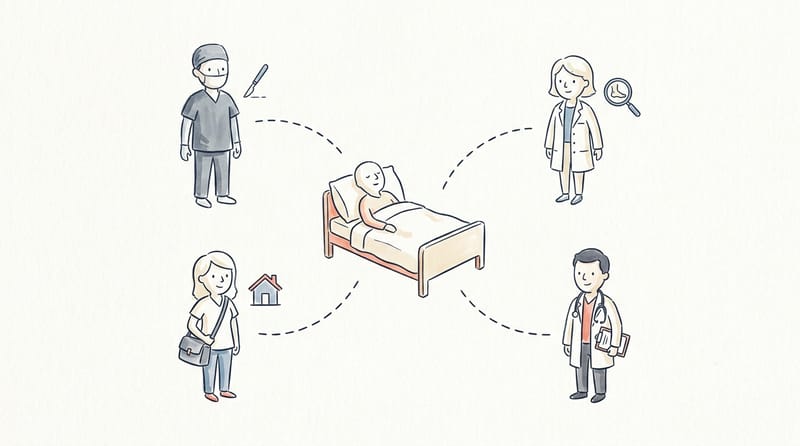
Those people work in different settings. ImagenyX connects hospitals, wound care facilities, home health agencies and patients in real time.
One relationship becomes a channel available to every patient, not only those who have my number.
After six months of full-time work, the app is in its third version. A limb salvage practice opening in Marble Falls will serve as our clinical test bed. We begin with limb salvage and will extend to other chronic conditions.